How many votes are cast in different ways?
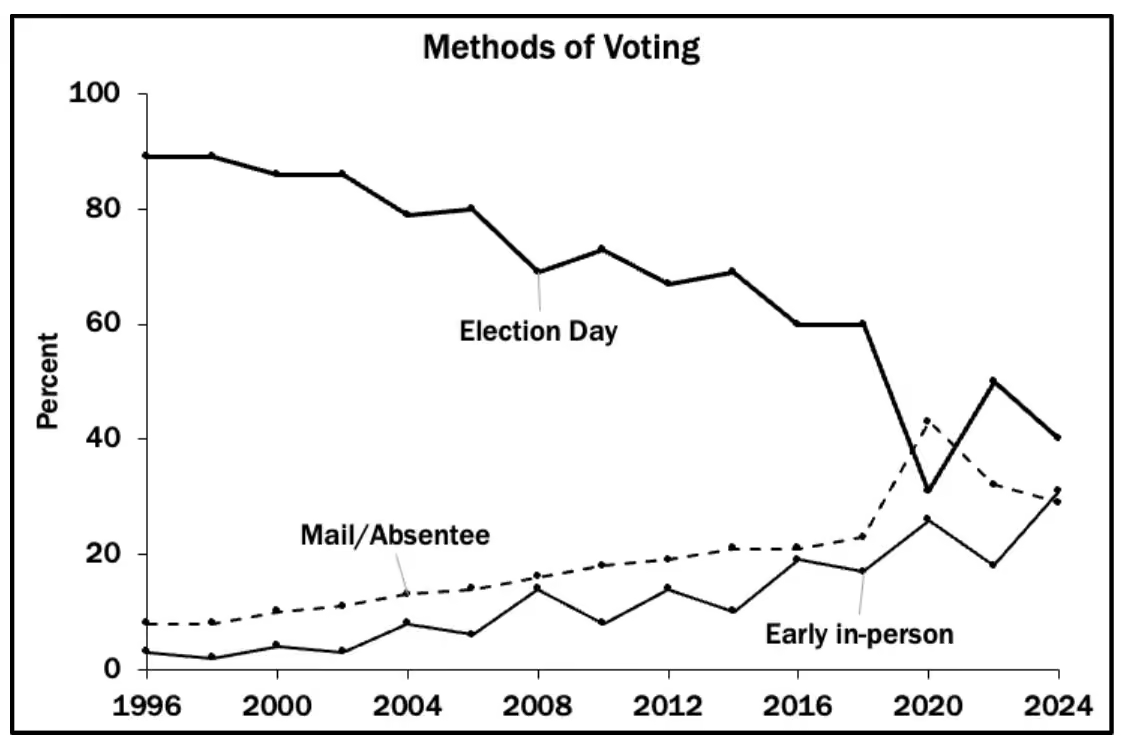
In recent elections, fewer than half of voters cast their ballots on Election Day. In 2020, in the middle of the COVID pandemic, only 31% voted on Election Day, 43% cast a mailed ballot, and 23% voted early in person. After social distancing restrictions were lifted, more people voted in person, and the number voting by mail dipped slightly, but in-person early voting hit an all-time high of 31% in 2024. As of 2026, eight states (California, Colorado, Hawaii, Nevada, Oregon, Utah, Vermont, and Washington) and Washington, D.C., conduct elections entirely by mail.
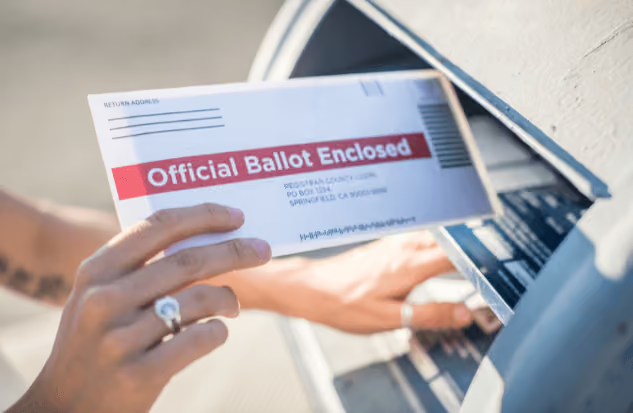
The percentage of Americans casting mail-in votes has increased in recent years. In 2020, during the middle of the COVID pandemic, 43% of voters cast a mail ballot. Even after social distancing restrictions were lifted, 31.9% of voters voted by mail in the 2022 general election, lower than the 2020 rate but higher than the 25.6% of mail-in voters in 2018. As of 2024, eight states (California, Colorado, Hawaii, Nevada, Oregon, Utah, Vermont, and Washington) conduct elections entirely by mail.
How do states regulate voting outside the polling site?
State policies concerning voting outside the polling site vary along four dimensions:
- Whether a state allows early voting;
- Whether voting by mail (absentee) requires an excuse or is available to everyone;
- Whether ballots must be mailed back or can be put in a drop box;
- Whether mailed ballots must be received by Election Day to be counted or if there is a grace period.
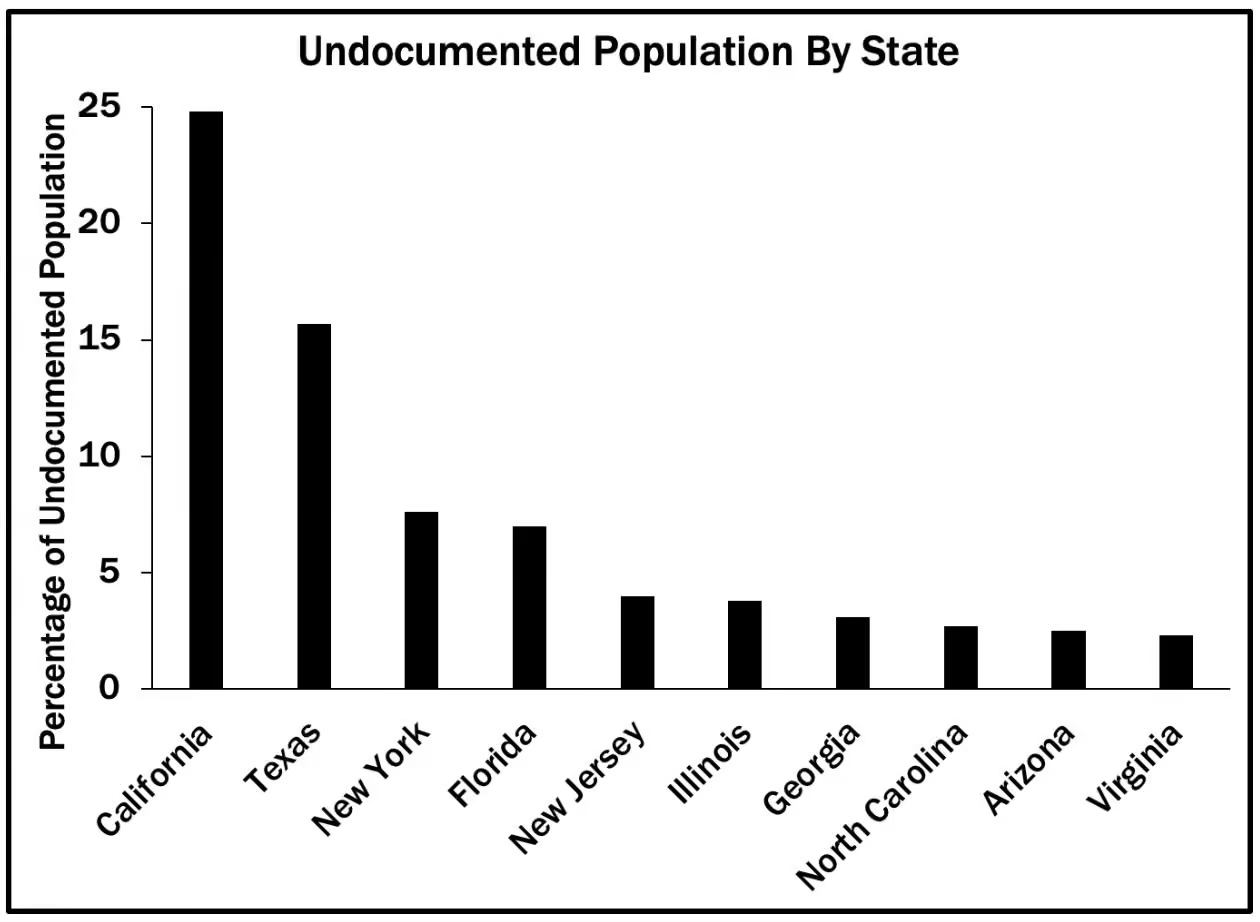
Analysis by Everything Policy, shown below, divides states into three groups (Democratic, Swing, and Republican) and, using data from the National Council of State Legislators, shows the percentage of each group with strict regulations in each area.
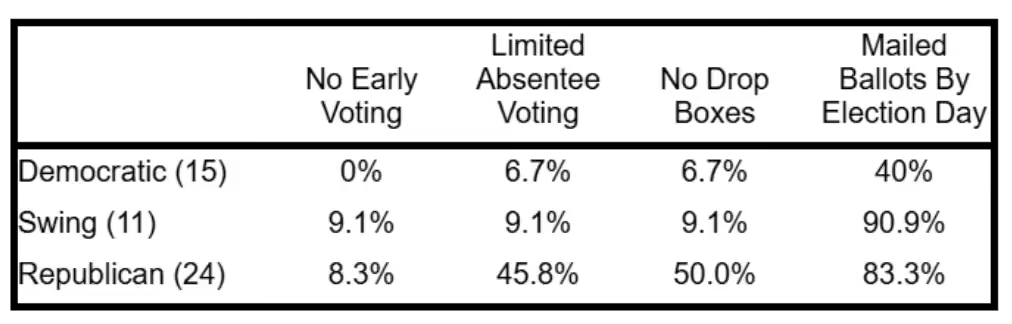
The data shows that only a few states do not have early voting (Alabama, Mississippi, and New Hampshire). Further, while only a few Democratic-controlled and Swing states limit absentee voting, a near-majority of Republican states do so. Republican states are also much more likely to ban drop boxes and require voters to return mailed ballots by Election Day.
Legal challenges to election laws
Given this partisan split in voting, there is frequent litigation over the boundaries of election law. A recent Supreme Court case considered whether federal law preempted a Mississippi state law granting a five-day grace period after Election Day for ballots postmarked by Election Day to be counted. The Republican and Libertarian parties challenged the law, saying that Congress established an Election Day and allowing ballots to be counted after that day violated the intent of the law. The Supreme Court disagreed, ruling that states could accept ballots received after Election Day as long as they were postmarked by Election Day.
What are the pros and cons of early voting, voting by mail, and absentee voting?
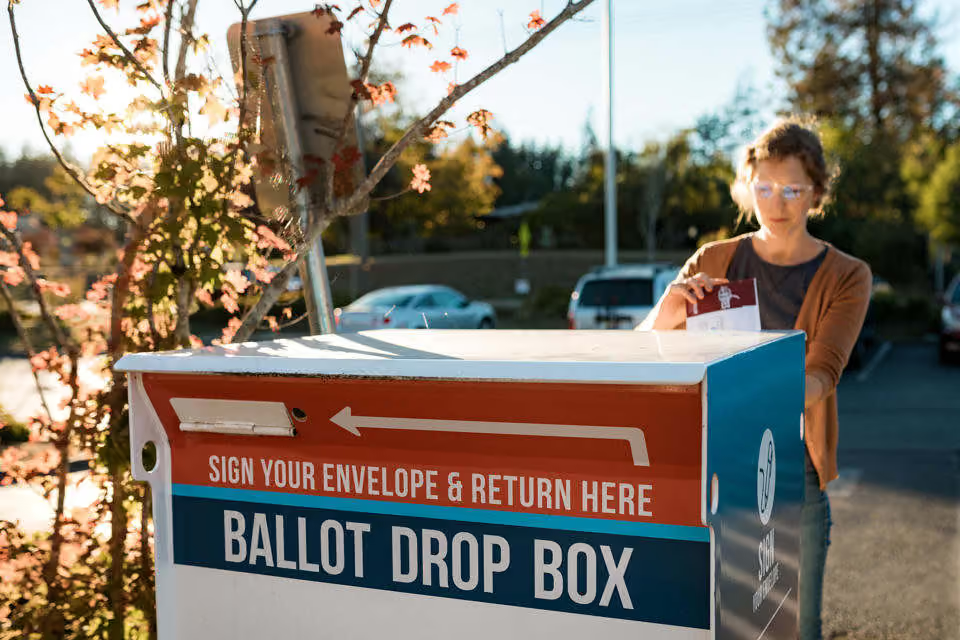
Advocates of so-called “convenience voting” argue that increasing access to voting has three main advantages: increasing turnout, reducing costs to voters and local governments, and increasing informed voting. Several studies show that voting by mail has little impact on turnout. However, it can reduce costs insofar as local governments reduce the number of voting sites open on Election Day. Some evidence suggests that vote-by-mail increases informed voting because voters are more likely to research individual races or candidates while filling in their ballots. Voting by mail also makes voting easier for some citizens, especially for the elderly and those with mobility constraints, as they do not have to visit a polling station on Election Day.
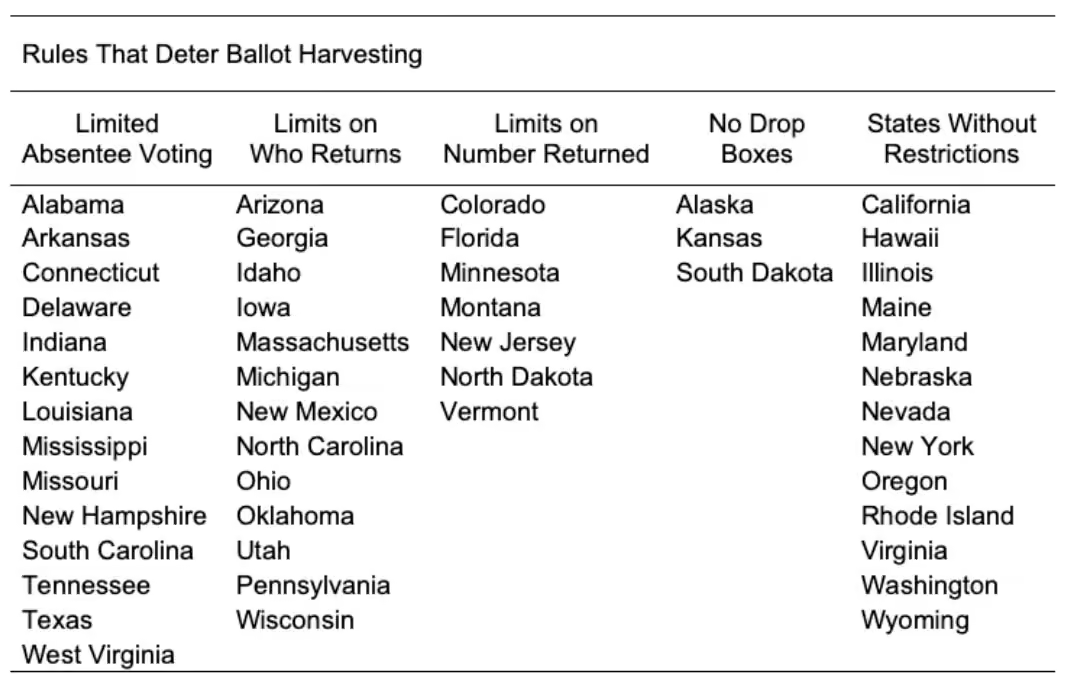
Opponents of mail-in voting argue that voting from home via mail-in ballot may increase the likelihood that a voter unintentionally omits required information or incorrectly fills out the form, leading to a higher rate of rejected ballots. Another concern is the practice of ballot harvesting, where an organization distributes large numbers of mail-in ballots to citizens, then returns to collect the completed ballots and submit them on the voters’ behalf, in some cases attempting to sway the voter in a particular direction. Some states ban this practice entirely, while others restrict the number of harvested ballots. However, in many states, there are no restrictions on ballot harvesting.
Other critics of mail-in voting argue that it permits voter fraud, as someone could fill out another person's ballot in an attempt to vote more than once. However, as we discuss here, there is no evidence that voter fraud occurs in more than a few isolated cases. Finally, critics also point out that allowing ballots that are received after Election Day to be counted can delay determining outcomes. In 2024, the nation had to wait 9 days after Election Day to know which party held a majority in the House.
The Takeaway
Over the last decade, the number of states allowing early voting, vote-by-mail, and no-excuse absentee voting has increased significantly.
Thus far, this change in how Americans vote has occurred without any material documented signs of increased voter fraud.
Compared to Democratic-controlled and Swing states, Republican states (especially in the South) are more likely to limit mail-in voting.
Fifteen states allow mailed ballots to be counted for varying numbers of days if they are postmarked by Election Day. The Supreme Court recently upheld those state laws, saying that they are consistent with national laws that establish a single Election Day.













.avif)

.avif)