The Voting Rights Act
The Voting Rights Act was enacted by Congress and signed by President Johnson in 1965. There were two key provisions in the VRA. Section 2 allowed federal lawsuits to strike down state and local laws that discriminated against Blacks by making it harder for them to vote. It also allowed lawsuits against state and local actions (such as redistricting) that made it harder for Black candidates to win elections.
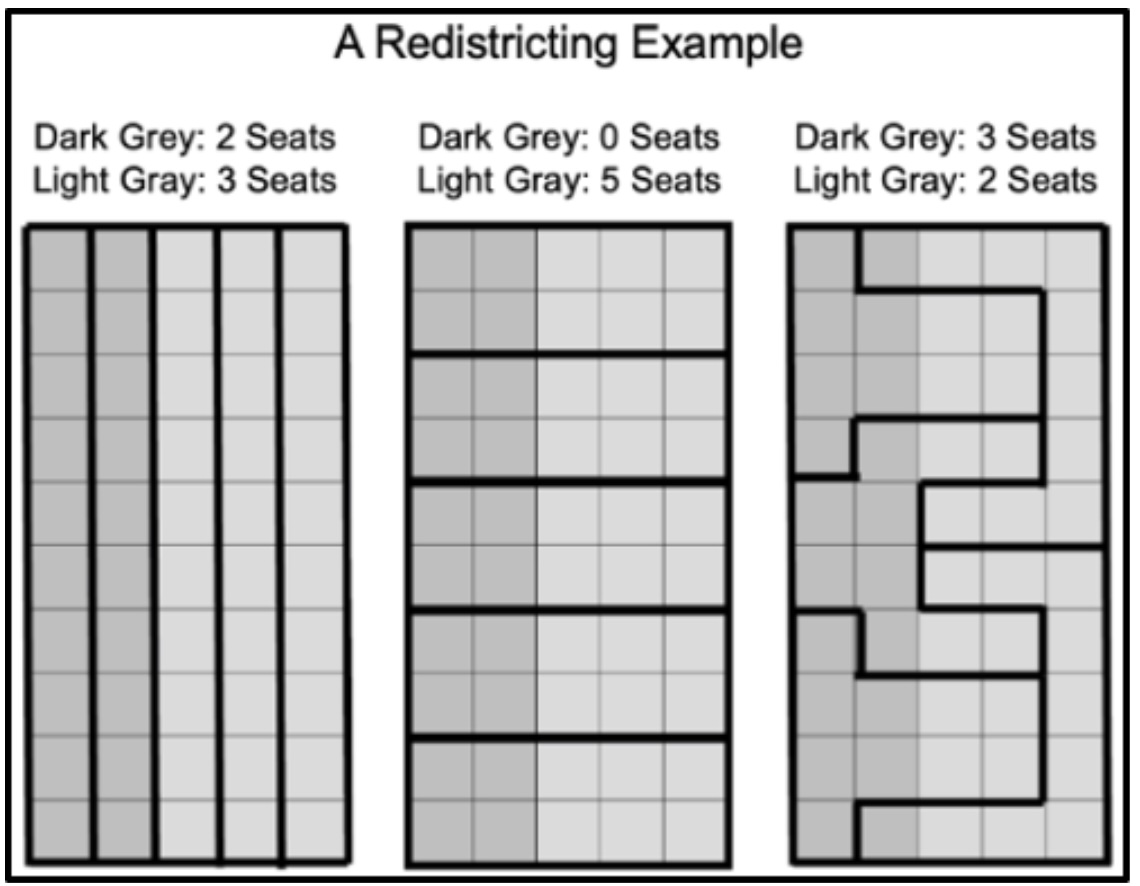
One effect of Section 2 was that states created a number of majority-minority congressional and state legislative districts in which minority voters made up a majority of the district’s population. Currently, there are about 40 majority-minority districts across America, created in response to Section 2, including 12 in southern states.
Section 5 of the Voting Rights Act also required state and local governments with a history of minority discrimination (mostly in the South) to have new election laws pre-reviewed by the federal Department of Justice, which could overturn them. A 2013 Supreme Court case eliminated this provision, Shelby County v. Holder.
One of the most significant impacts of the VRA is its contribution to the increase in the number of minority politicians elected to office. Consider Blacks. As the figure below shows, before the passage of the VRA, there were very few Black congressmen. In the current Congress, 70 members of the House of Representatives are Black, or about 15% of the chamber, which is the same as the percentage of Blacks in the population.

The Court’s decision: Callais v. Louisiana
After the 2020 Census, Louisiana was allocated six seats in the U.S. House of Representatives. About one-third of Louisiana residents are black. The Louisiana State Legislature adopted a districting plan with one majority-minority district and five other districts. The plan was expected to elect five Republicans and one Democratic representative who was also Black.
After a series of court decisions under Section 2 of the VRA invalidated the districting plan, the Louisiana legislature in 2024 adopted a new plan with two majority-minority districts. Currently, there are four Republican House members in Louisiana and two Democrats, both Blacks elected from the majority-minority districts.
The plaintiffs in Callais v. Louisiana argued that the new plan, because it was deliberately designed to elect an additional Black representative, was unconstitutional. Implicitly, the plaintiffs argued that Section 2 of the Voting Rights Act, as federal courts then interpreted it, was also unconstitutional.
A 6-3 majority of the Supreme Court agreed. The majority’s decision said that redistricting based on race was unconstitutional, regardless of whether it was done to encourage or discourage the election of minorities. The decision also said that a districting plan that reduced minority representation could be constitutional if it were done to achieve other goals, such as protecting incumbents or a partisan gerrymander.
Why does the decision matter?
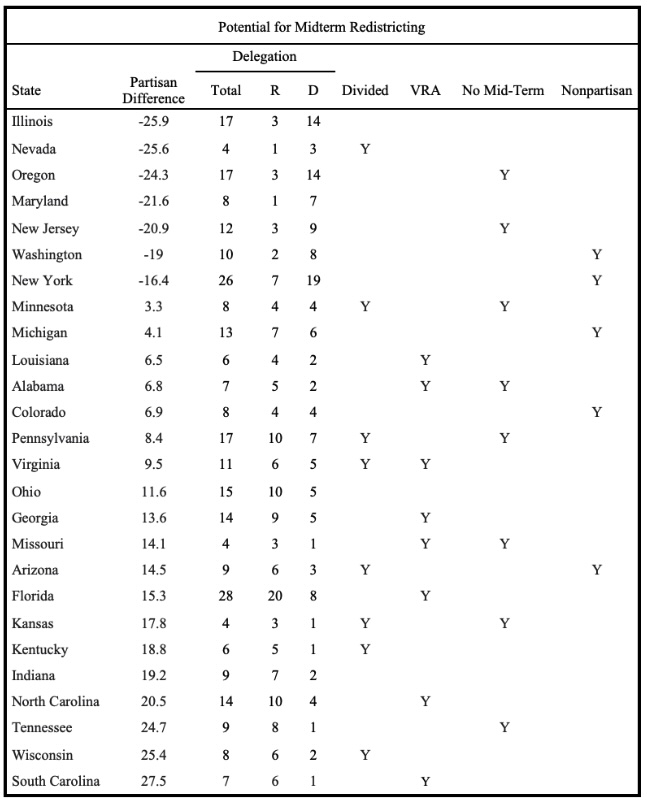
One immediate impact of the Callais decision is that politicians in southern states may try to eliminate majority-minority districts using mid-cycle redistricting, in time for the 2026 congressional midterms or the next election in 2028. (For details on mid-cycle redistricting, see our brief.) There are currently 12 such districts in southern states, all currently held by Democrats.) Given that most of these states are solidly Republican, it is likely that all of the new districts would elect Republicans.
Legislators in these states may also act to reduce the number of majority-minority districts in state and local legislatures. Such changes will increase the number of Republican elected officials in these states and may create veto-proof (2/3rds) majorities in some state legislative chambers.
While there are also majority-minority districts in Democratic-controlled states such as California, Illinois, and New York, eliminating these districts is unlikely to change the number of Democrats and Republicans elected to state and congressional offices. This is due to the population makeup, which would likely only distribute Democratic voters more evenly. Moreover, because Blacks are a key Democratic constituency, Democratic lawmakers in these states will be reluctant to make changes that reduce the number of Blacks elected officials.
The Takeaway
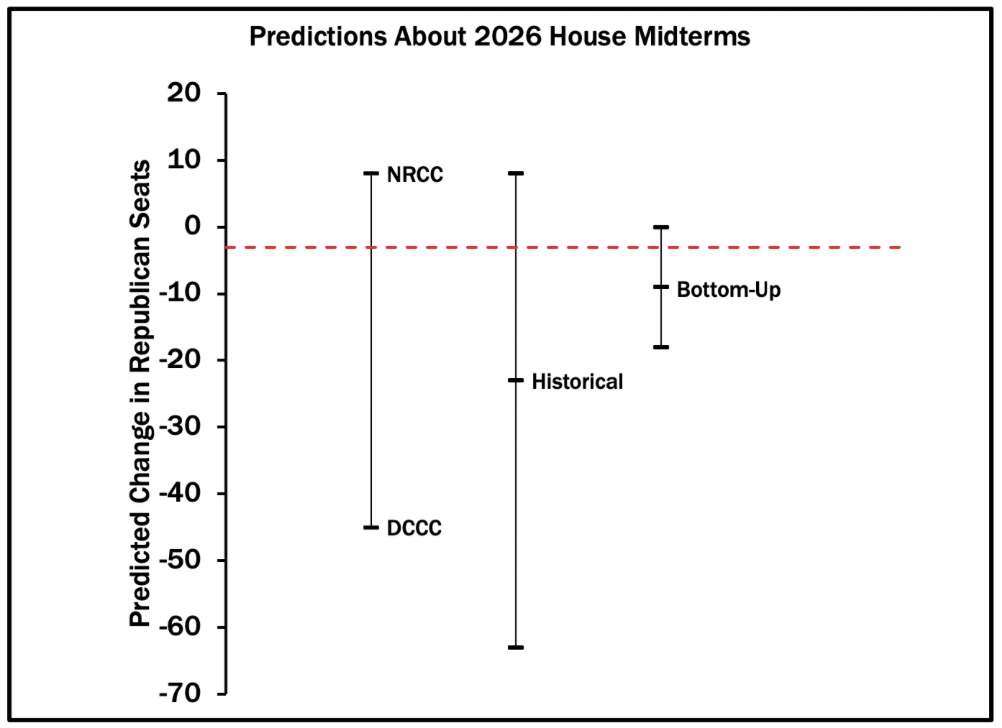
The Callais v. Louisiana case shows how the Supreme Court’s decisions can have immediate, real-world impacts. Redistricting based on this decision could shift a dozen congressional seats to Republicans over the next two elections. See our brief for analysis of the 2026 midterms.
The case also shows how normative beliefs can conflict. Over the last 60 years, the VRA has reduced discrimination against minority voters and candidates. At the same time, one of the main remedies created by the VRA, majority-minority districts, advantages minorities over non-minorities.
States are unlikely to resume the highly discriminatory election practices that were common before the VRA. However, the Court’s new interpretation of Section 2 of the VRA eliminates one of the main legal tools for redressing such discrimination.

.png)