What powers do presidents have?
Modern presidential authority has both formal and informal roots. Formal powers derive from the Constitution, such as the president’s ability to sign or veto laws and serve as head of the executive branch, and from statutory powers established in laws, such as the ability to implement policies, nominate executive branch leaders, and declare national emergencies.
The separation of powers places limits on these formal powers. For example, Congress can override a presidential veto with 2/3rds majorities. The Senate must approve most executive branch appointments. And Congress can terminate national emergency declarations.
The president also has significant inferred and informal powers. Inferred powers are not specified in the Constitution but logically extend the president’s authority. Executive orders, declarations made by the president that have the effect of law, are an example of inferred powers. These unilateral actions are widely accepted as necessary to ensure that “laws be faithfully executed.”
Informal powers have no Constitutional basis. They include the president's ability to use their prominence to pressure and persuade others to act on their behalf, called the “bully pulpit.” Historically, given the relative weakness of formal presidential authority, presidential power largely rested on the “power to persuade” Congress, the public, and other actors to act in accordance with their wishes.
How do parties impact the exercise of presidential power?
Political parties matter greatly for presidential success. Historically, presidents relied on state and local leaders to nominate them and on strong congressional parties to advance their agenda. Parties throughout American history have played an important role in enabling action, though they also pushed back against their own presidents when their goals diverged.
Today, presidents play an increasingly central role as both the symbolic and practical heads of their party, known as “executive-centered partisanship.” As executive power has grown and parties have weakened, presidents have assumed a prominent role in advancing partisan objectives.
On the campaign trail and in office, presidents increasingly define party doctrine and set policy agendas. President Trump, for example, has shifted political attention toward his administration’s policy preferences on immigration and reoriented the Republican Party around protectionist trade policies. The nationalization of politics means members of Congress's electoral outcomes are strongly tied to the success of their party’s presidents, increasing support for them.
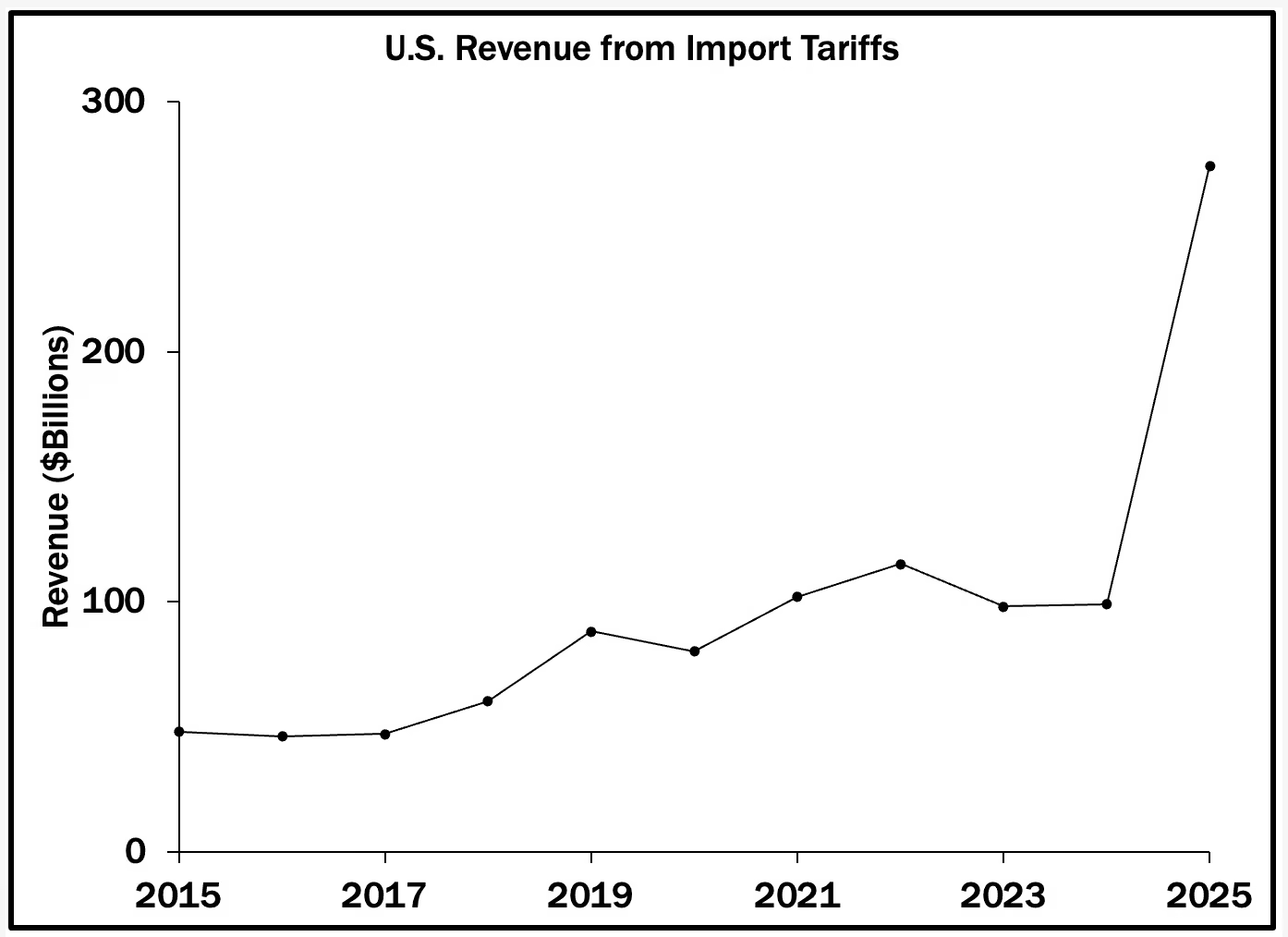
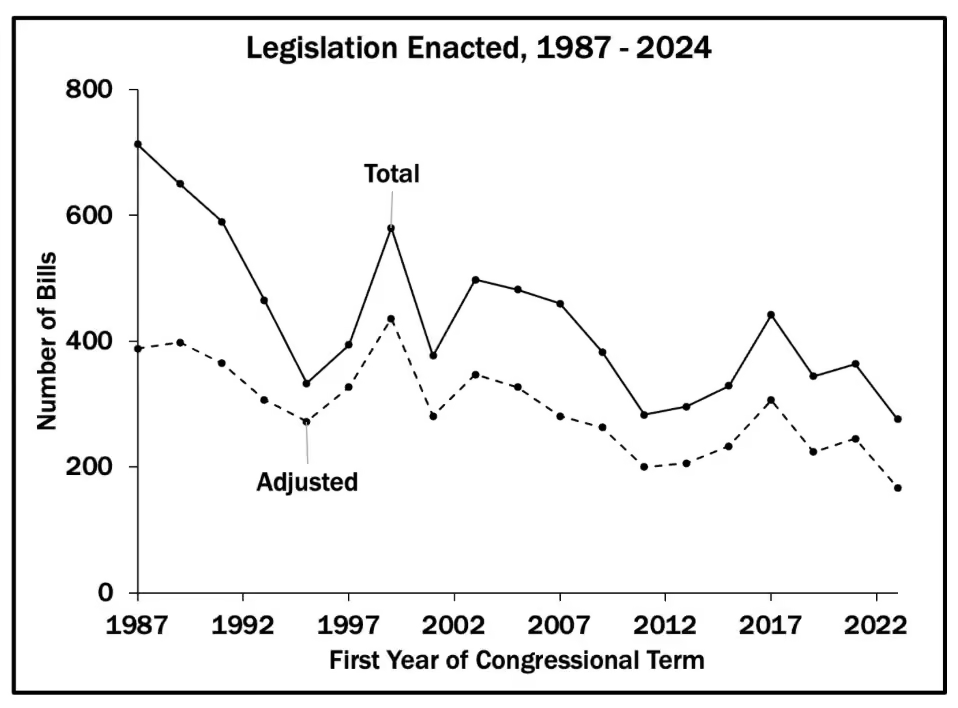
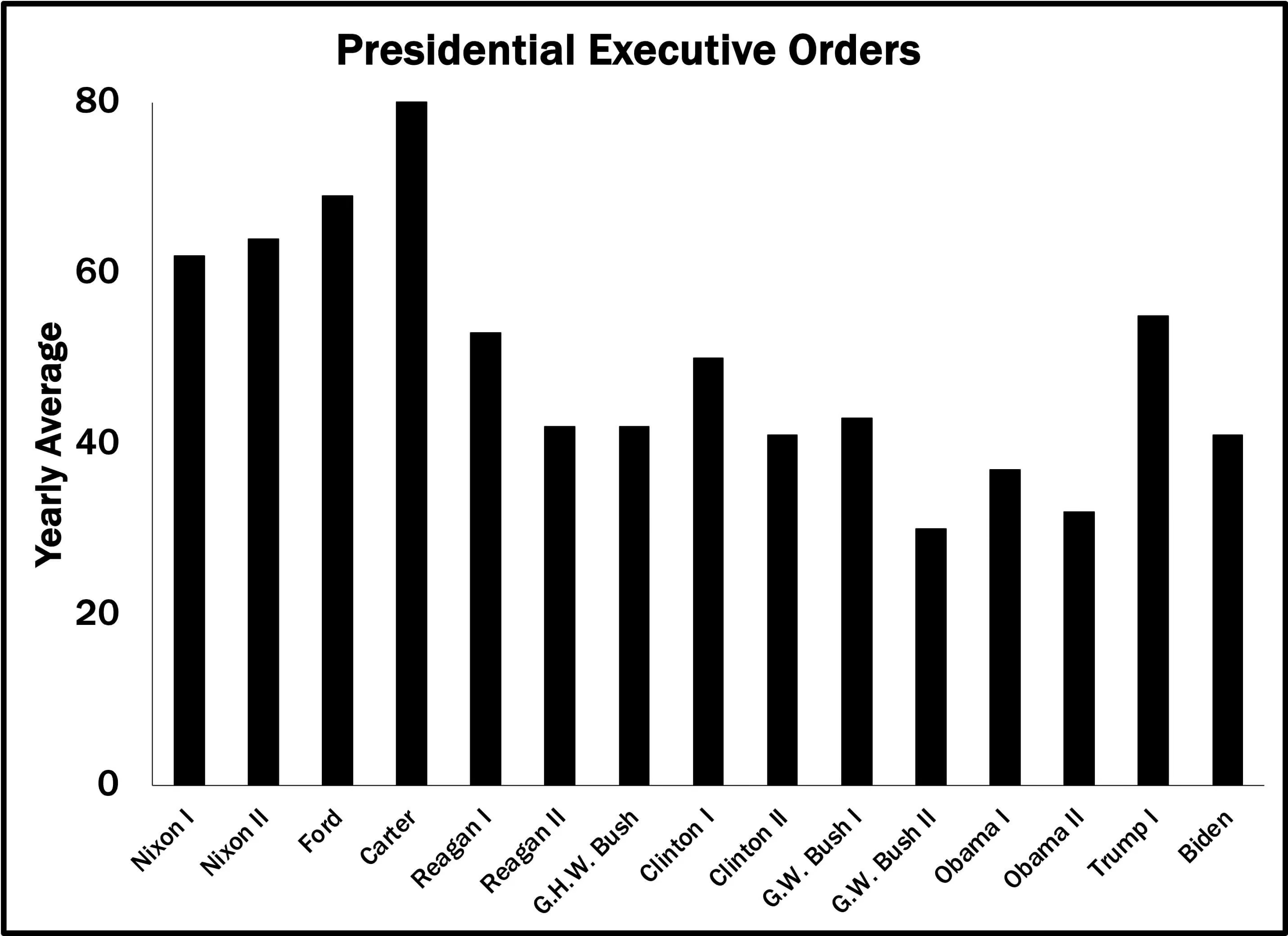
Congress has also become more gridlocked in recent decades. As a result, the executive branch increasingly advances partisan policy goals through unilateral action. In 2025, for example, Trump issued 225 executive orders – advancing policies like immigration enforcement, administrative state reductions, and tariffs – even though Republicans had unified control of Congress. For more information about how many executive orders past presidents have issued and the limits on presidential executive orders, please visit this brief.
The accumulation of presidential power, overall and within their party, makes it harder for actors within Congress to push back against executive overreach. The growing alignment between the president and their party can undermine checks and balances and allow presidential power to expand.
During Trump’s second term, some Republican members of Congress have pushed back – opposing select nominees, for example, or signaling disapproval of tariffs and the Iran war – but have mostly allowed the president to pursue his agenda. Not uncommon during either party’s control of Congress, opposing views of a president’s actions by their own party may be hard to fully see because they often take place behind closed doors.
What about the opposing party? Presidential power is most likely to grow under unified government, when the president’s party also controls the House and Senate. But divided government, when the House and/or Senate are controlled by a different party, is fairly common.
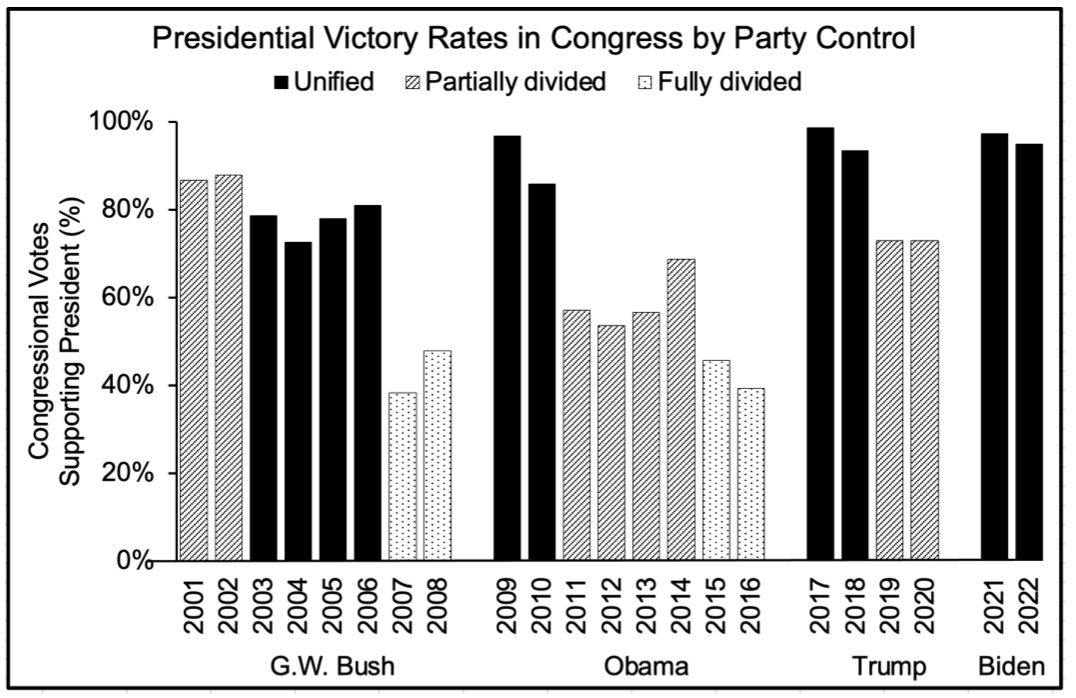
Under divided government, presidents find it harder to advance their goals legislatively. Congressional gridlock and legislative failure are more common. The figure below shows the share of congressional votes supporting the president’s position under unified partisan control, partially divided government (the opposing party controls one chamber of Congress), and fully divided government (the opposing party controls both chambers). Presidents clearly win more under unified government and less under divided government.
The out-party also uses its control of Congress to check presidential power through increased oversight of the executive, investigations into presidential abuses, and delays and rejections of presidential nominees. In some instances, however, both political parties have been accused of using such Congressional control to halt or otherwise derail a president’s or their specific party’s political agenda without a solid basis for such actions.
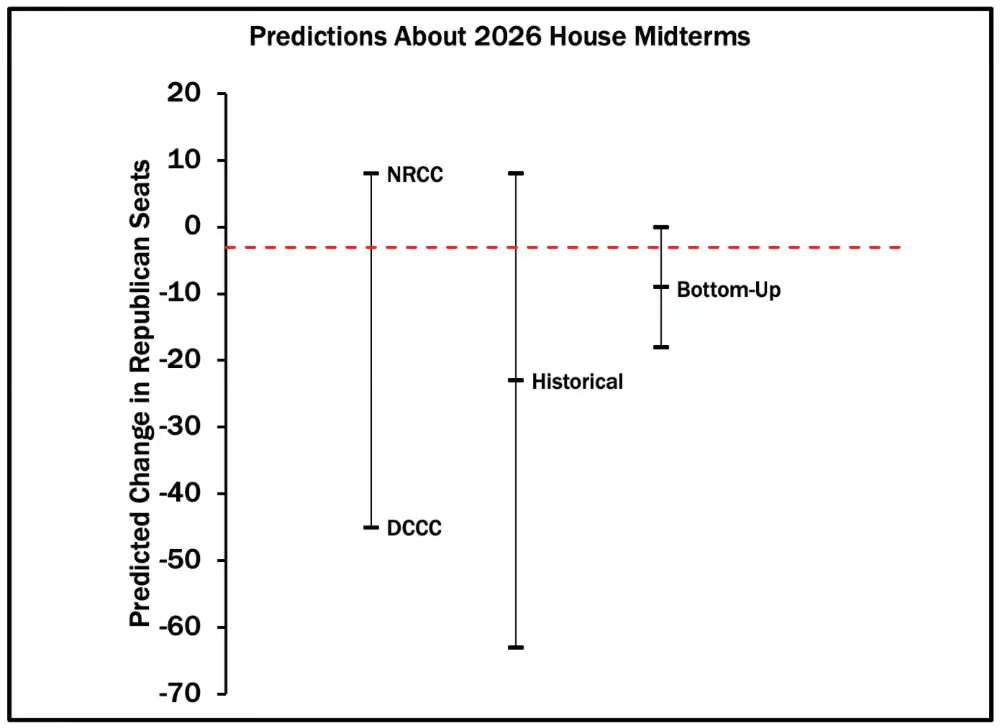
What does this suggest about a Democratic-controlled Congress in 2027?
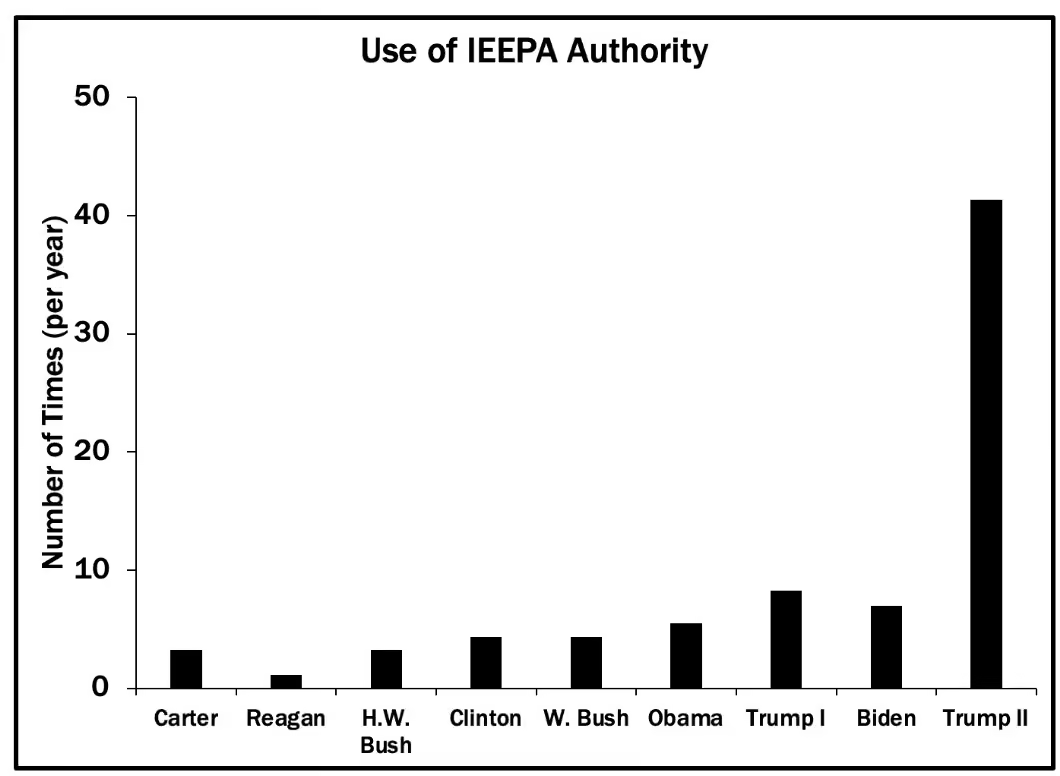
Trump has significantly expanded presidential power since returning to office in 2025. He is on pace to issue far more executive orders than in his prior term, and his predecessors, relying more on unilateral action than on congressional lawmaking. He has also used emergency powers and his control of executive branch agencies to pursue his priorities far more than previous presidents.
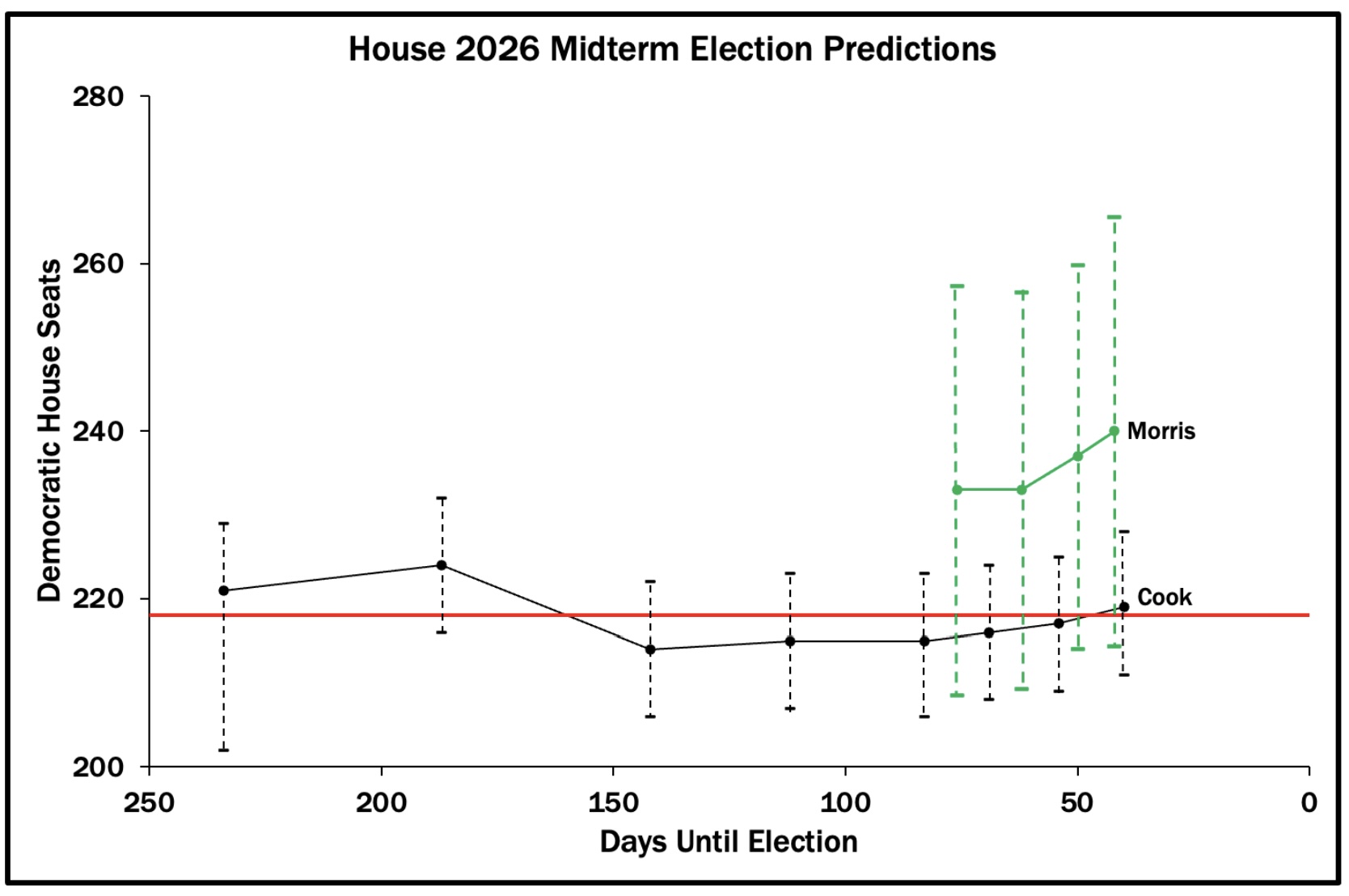
On the one hand, Trump’s executive-centered policymaking approach may be somewhat resilient if Democrats win control of Congress in the 2026 midterms. Since he has seldom relied on Congress to advance his agenda, out-party control might matter less for his policy positions to progress than it has in the past.
On the other hand, Congress has a wide range of tools available to push back against Trump’s policies. Not unlike during Biden’s term when Republicans opened investigations, Democrats have promised, should they take control of the House and/or Senate in 2027, to open investigations into Trump’s business dealings, the Iran War, ICE practices, and other areas. Investigations and hearings can lower presidential approval regardless of the actual basis and validity of such dealings.
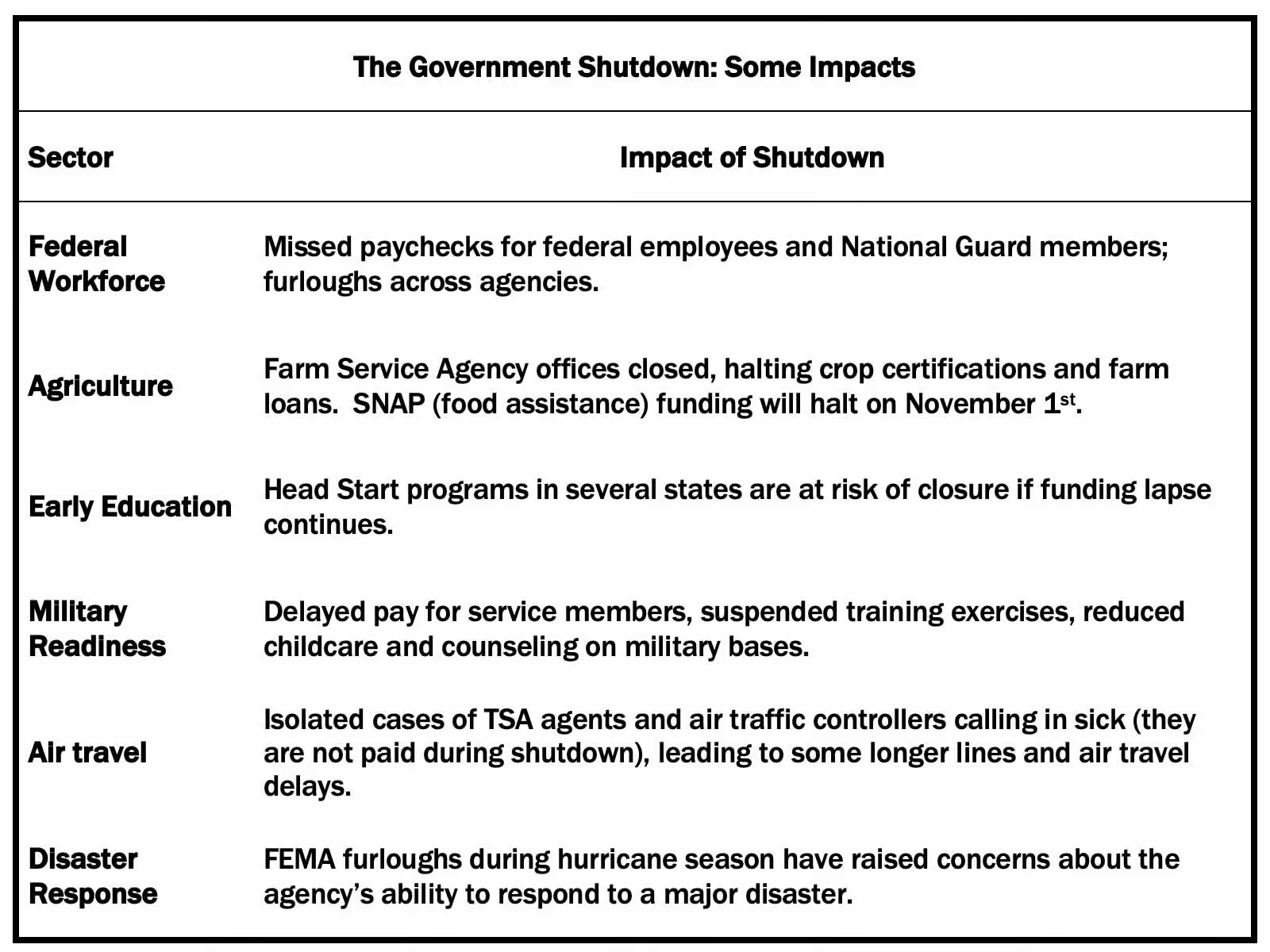
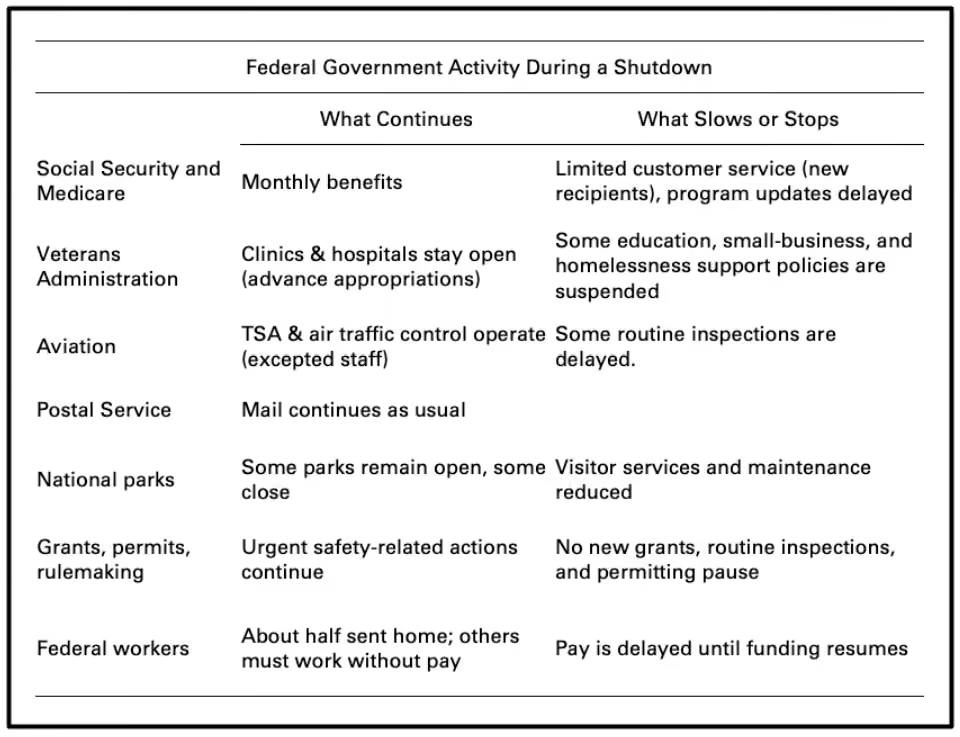
A Democratic majority would also have policy tools. Because spending bills originate in the House, Democrats could demand policy concessions from the Trump Administration in exchange for supporting required appropriations bills. One possibility is that Trump agrees to some of these demands; another possibility is a prolonged government shutdown if the two sides cannot reach an agreement.
Even with full Democratic control of Congress, Trump would have a powerful negotiating tool: the veto. On the Iran War, for example, Democrats could try to pass a joint resolution to end hostilities, but Trump would likely veto this. The same is true if Democrats voted to end Trump’s emergency declarations under the National Emergencies Act. Unless Democrats can muster 2/3rds supermajorities in both chambers, these vetoes would stand. Instead, Democrats might turn to their appropriations powers and limit funding for the war – a strategy that has been used in the past.
It would also matter whether Democrats control the Senate. If so, they could slow or block nominations for judges and cabinet officials. The opposing party often uses this strategy to extract other policy concessions.
Finally, some Democrats have called for President Trump to be impeached. Impeachments originate in the House and require a simple majority. But conviction and removal from office require a 2/3rds vote in the Senate, which would be unlikely even with a relatively large Democratic majority.
A key factor in how powerful Trump will remain in 2027 is his popularity. Even in an age of a strong executive, presidents rely on others to either support or ignore their expansions of presidential power. Their power to persuade rests largely on their popularity and influence. If Trump’s popularity continues to slip, Democrats may be more successful at challenging him, and even some Republicans may become more willing to push back if supporting Trump threatens their own political survival.
The Takeaway
Presidential powers have expanded greatly over the 20th and 21st centuries, but presidents still rely heavily on inferred and informal tools to push their agendas.
Parties and partisanship play a key role. Members of the president’s party often allow the president to expand their power to pursue partisan objectives.
Congress can play an important role in checking presidential power. Democratic control of Congress in 2027 would likely result in targeted pushback against the Trump Administration. Some of this pushback might succeed in changing policy and reining in executive power, while some might have more symbolic effects and other efforts will likely fail.